For many mountaineers in Slovenia, the question is not if they will climb Triglav, but when.
Summer vs Winter Triglav are two completely different climbs, even though the summit is the same.
This article is for mountaineers who already move well in alpine terrain and want a clear view of how the mountain changes with the season.

Summer vs Winter Triglav: Two Very Different Climbs
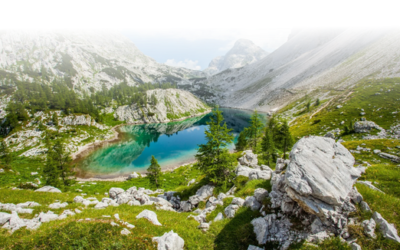
In summer, Triglav is usually a long alpine hike with a via ferrata finish. The normal route offers rock, fixed protection, and short exposed sections, but conditions are often dry and fast.
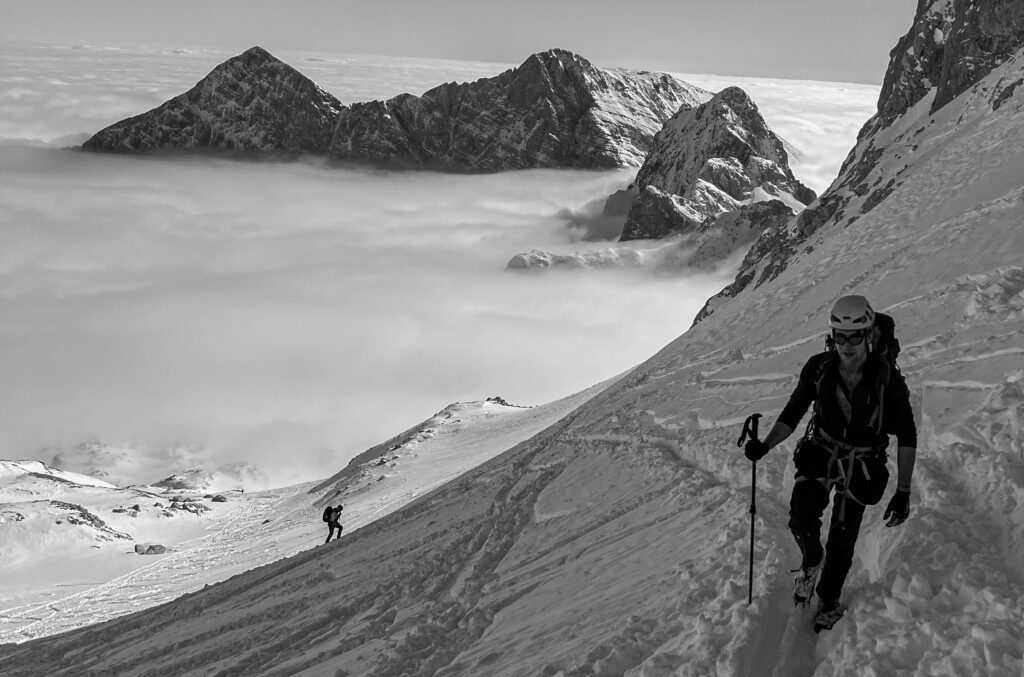
In winter, Summer vs Winter Triglav becomes a real contrast. The same ridges and slabs turn into mixed ground, covered with neve, ice, and wind–packed snow. Movement changes from hiking to full winter mountaineering, with crampons, an ice axe, and a rope on more exposed sections.

Terrain and Conditions
Summer Triglav
- Mostly dry trail up to the higher sections
- Via ferrata character on the ridge, with cables and stemples
- Crowds in high season, especially around Kredarica and the summit ridge
- The main challenge is endurance, exposure, and weather
Winter Triglav
- Snow from the valley or high in the approach, depending on the season
- Hard neve, wind crust, and sometimes unstable slabs on steeper slopes
- Summit ridge can be narrow, with cornices and mixed steps
- The approach may involve breaking trail or ski approach before switching to crampons
Good winter mountaineers treat the ascent as a full alpine mission, not just a long hike.

Objective Hazards and Risk Management
On summer ascents, the main objective hazards are:
- Rockfall in warm periods
- Thunderstorms and fast-building convective clouds
- Slips on exposed sections of the via ferrata
In winter, the focus shifts. IFMGA-standard decision-making looks closely at:
- Avalanche terrain on the approach slopes and in gullies
- Wind–loaded aspects and recent snowfall
- Stability of the snowpack on traverses under rock bands
- Visibility and wind on the summit ridge
A winter Triglav ascent demands solid judgement, strict turnaround times, and a clear margin for the descent.
Which Triglav Ascent Fits Your Skills?
Choose the summer Triglav if you:
- prefer a long, exposed alpine route with via ferrata style
- want a first experience on the highest peak of Slovenia
- are ready for altitude, weather changes, and big days out, but not yet looking for serious winter conditions
Choose winter Triglav if you:
- Already have experience with crampons, an ice axe, and avalanche terrain
- Enjoy quieter mountains and a real winter commitment
- Accept that the summit is never guaranteed and that safe decisions come first

In both cases, an IFMGA guide manages pace, risk, and route choice so you can focus on strong movement and good style.
If you want to plan your own ascent dates and see how conditions in the park change over the year, check the official Triglav National Park website for current information.
And if you are ready for a guided ascent, you can explore our Climb Triglav trips on Outventure X and choose the season and style that fit you the best.