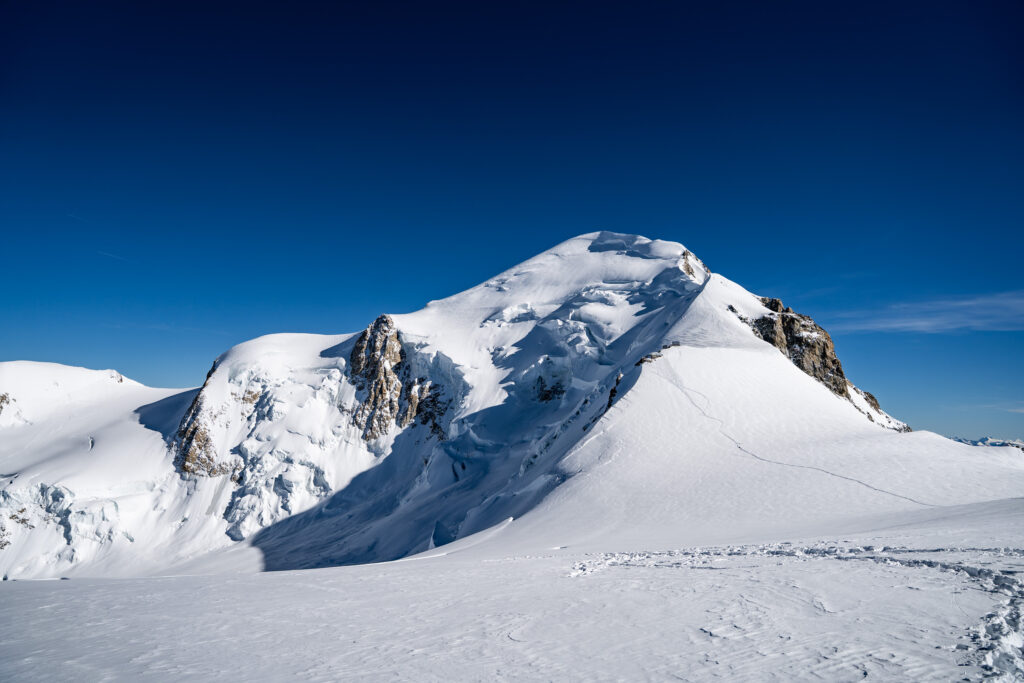
Mont Blanc remains one of the most iconic summits in the Alps. At 4,808 m, it is not only the highest summit in Western Europe, but also a peak that demands solid alpine experience, efficient movement, and respect for current conditions.
A Mont Blanc guided climb with an IFMGA-certified guide offers a structured, safe approach for those who already understand the mountain environment and want a professional partner for a high-commitment ascent.
A Peak With Real Alpine Character
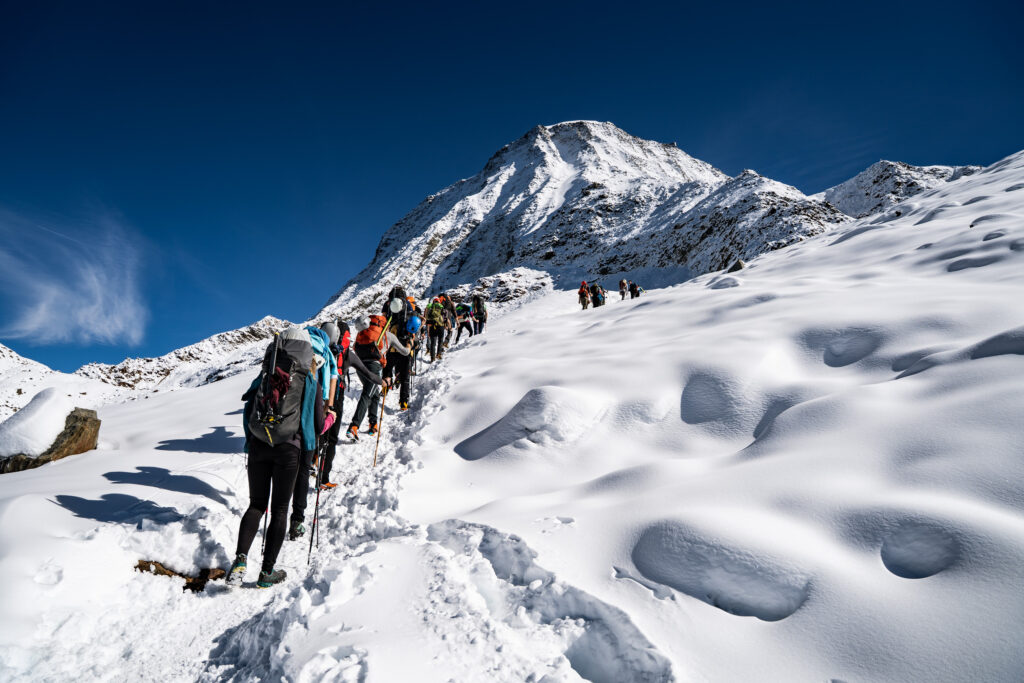
Mont Blanc is often described as an “easy 4000er,” but anyone with real experience in the high mountains knows this is misleading. The mountain requires:
- Excellent acclimatization
- Stable weather
- Strong crampon/ice axe technique
- Experience with glaciated terrain
- Confidence in exposed ridges
The altitude, the long summit day, and the objective hazards — especially rockfall zones and crevassed sections — make the climb a serious undertaking.
Standard Routes and Style of Ascent
Most mountaineers choose one of the classic lines:
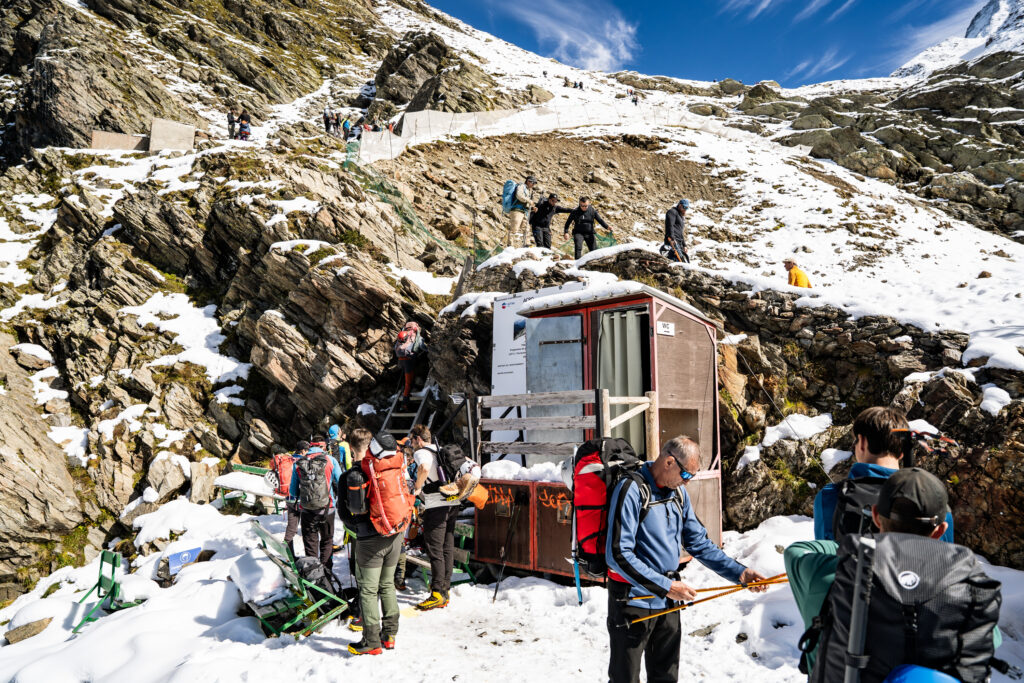
Goûter Route
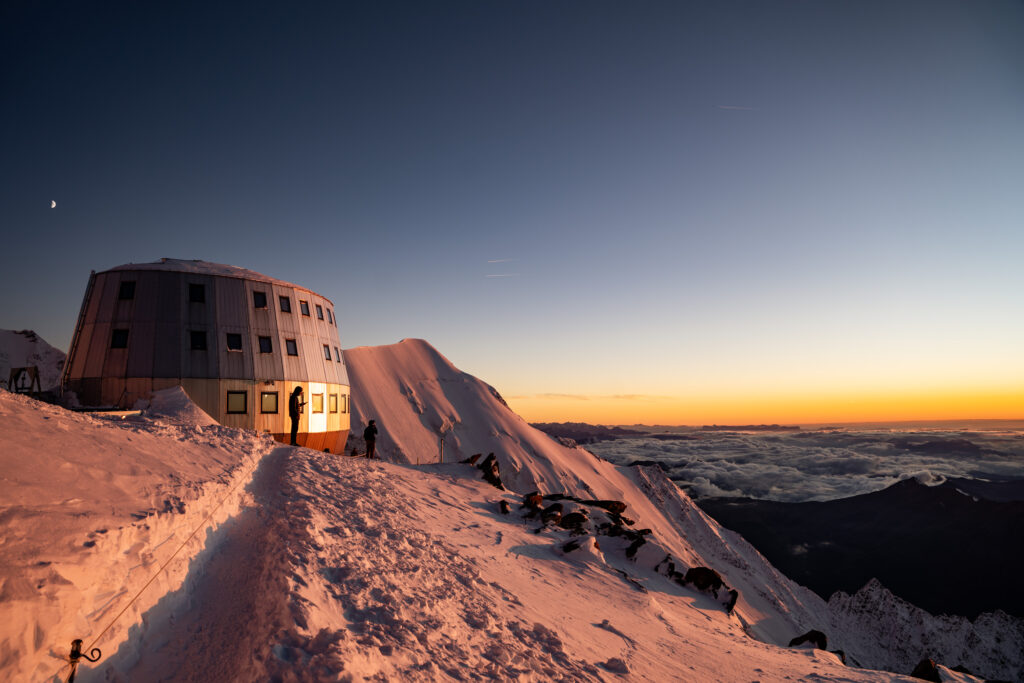
A direct and efficient line with a long approach via the Tête Rousse and Goûter refuges. The key challenges here are:
- Crossing the Grand Couloir safely
- Managing the long summit push
- Staying disciplined with timing to avoid afternoon instability
This route is often the preferred option when conditions are stable and clients are well-prepared.
Three Monts Route
A more technical and exposed traverse via Mont Blanc du Tacul and Mont Maudit. This is a beautiful high-alpine line with steep ice sections, seracs, and sustained altitude.
It requires:
- Precise crampon work
- Solid fitness
- Comfort moving efficiently on steeper, exposed terrain
Because of its nature, this route is best suited to climbers who are already competent on mixed and glaciated terrain.
Why Climb With an IFMGA Guide
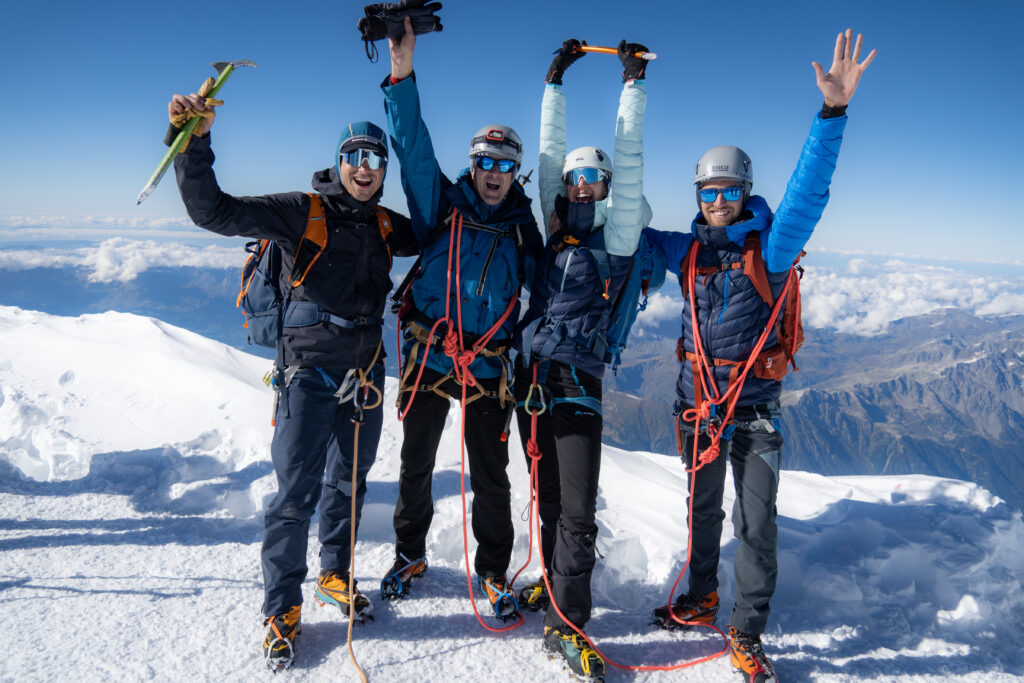
An IFMGA guide is trained to the highest international standard. Their role is not only to lead, but to manage risk, make real-time decisions, and ensure that movement, pacing, and timing stay aligned with safe practice.
On Mont Blanc, a certified guide helps by:
- Setting a safe and efficient pace
- Choosing the correct line based on conditions
- Managing objective hazards
- Providing accurate time management (crucial for both routes)
- Maintaining rope systems that follow IFMGA technical standards
For experienced climbers, the guide acts as a trusted partner whose knowledge of the mountain and local conditions adds real value.
If you’re looking for a professionally guided ascent that follows full IFMGA standards, you can explore our Mont Blanc guided tours here.
Acclimatization and Preparation
Success on Mont Blanc is strongly tied to proper acclimatization. Most teams include:
- A preparation climb between 3,500–4,000 m
- Technical refreshers for cramponing and ropework
- One or two nights at altitude before the summit push
A structured acclimatisation plan increases safety and performance, especially above 4,000 m, where pace discipline becomes essential.
The Summit Day
Summit day is long — often 10–14 hours — depending on the route and conditions.
Expect:
- Pre-dawn departure
- Efficient movement on mixed and glaciated ground
- Exposure to wind and low temperatures
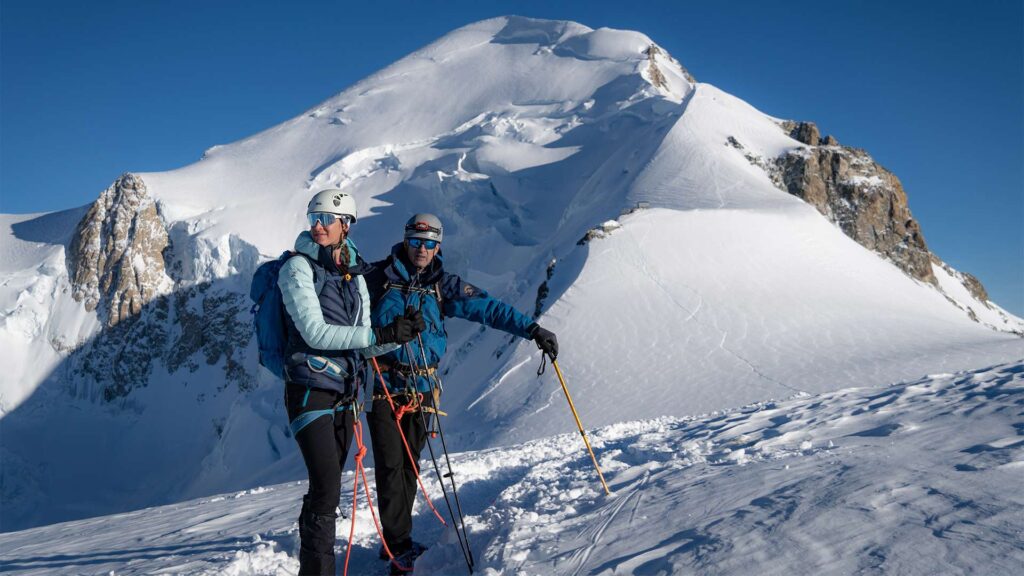
- A sustained final ridge to the summit plateau
The final meters offer a clean snow crest and enormous views across the Alps — a moment every alpinist remembers.
A Mont Blanc guided climb is a rewarding objective for well-trained alpinists. It combines physical endurance, high-alpine atmosphere, and classic European mountaineering routes. With the support of an IFMGA-certified guide, you gain a strong and reliable partner who understands the mountain deeply — helping you move efficiently, safely, and with confidence.